
The Royal Family in the Blackout: How the Castro Revolution Quietly Became a Dynasty
Fidel hid his sons for sixty years to protect the doctrine. His brother's grandsons are now negotiating with Trump while Havana eats darkness.
The Door They Left Open
A nightclub owner named Sandro Castro told American television: “Most Cubans want to be capitalist.”
That sentence is the door.
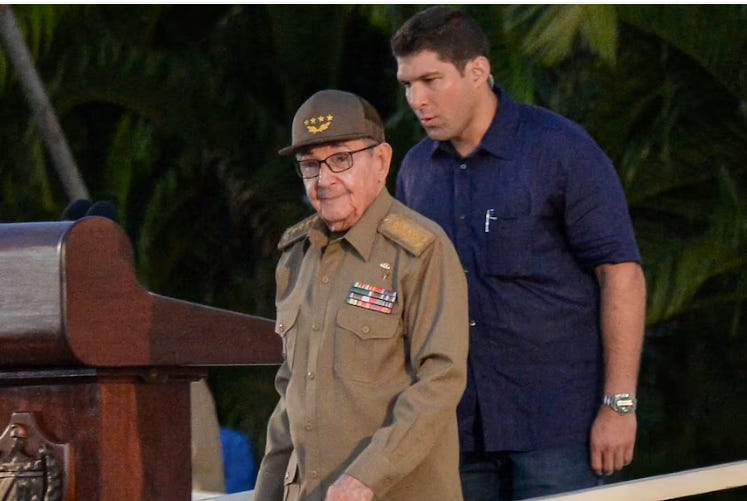
Not a defector. Not a dissident. Not an exile in Miami. A Castro. The grandson of Raúl. Live on US camera. Saying the quiet part out loud while his cousin Raúlito Castro sits across from the Trump administration in high-stakes negotiations, and the family’s old military conglomerate runs roughly forty percent of an economy that has stopped functioning.
The revolution did not surrender at the border. It surrendered at the family dinner table.
The Official Story
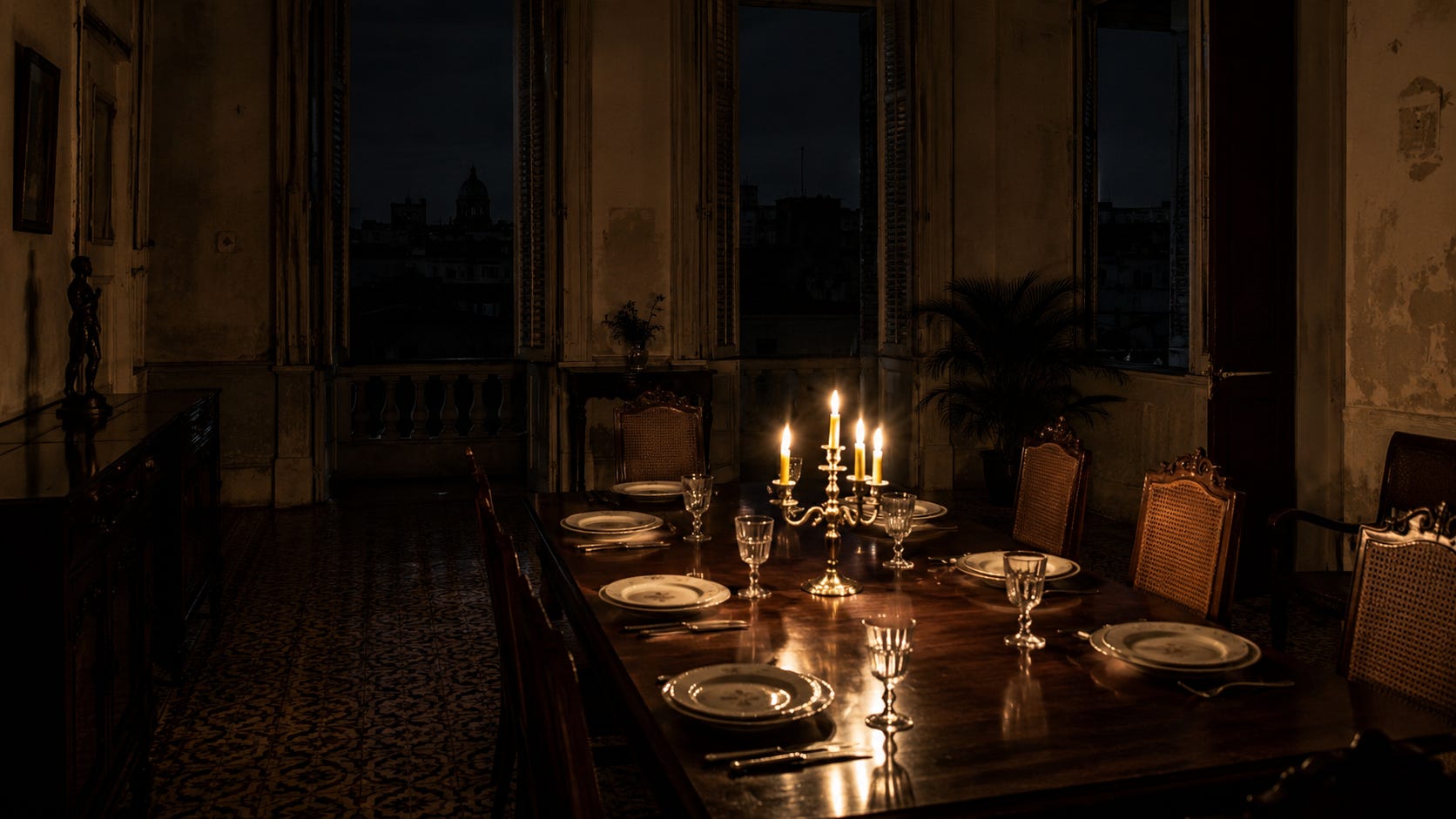
The public version is straightforward. Cuba is suffering through its worst energy crisis in decades. The Trump administration has imposed a sweeping oil blockade. Blackouts roll through Havana. Fuel is scarce. Citizens are angry. The government blames the United States. The opposition blames the government. The international press writes another cycle of “Cuba in crisis” coverage. It is the same story it has run every five years since 1962.
That is the surface. That is the frame the regime has always permitted.
The Part That Does Not Fit
The detail that breaks the surface is what The Times’ Stephen Gibbs heard on his last night in Havana. Riding through the pitch-black city on an electric motorbike taxi, he asked the driver who he blamed. The driver did not say the Americans. He did not say the embargo. He said, “la familia real.” The royal family.
That phrase was unthinkable five years ago. It is now street vocabulary.
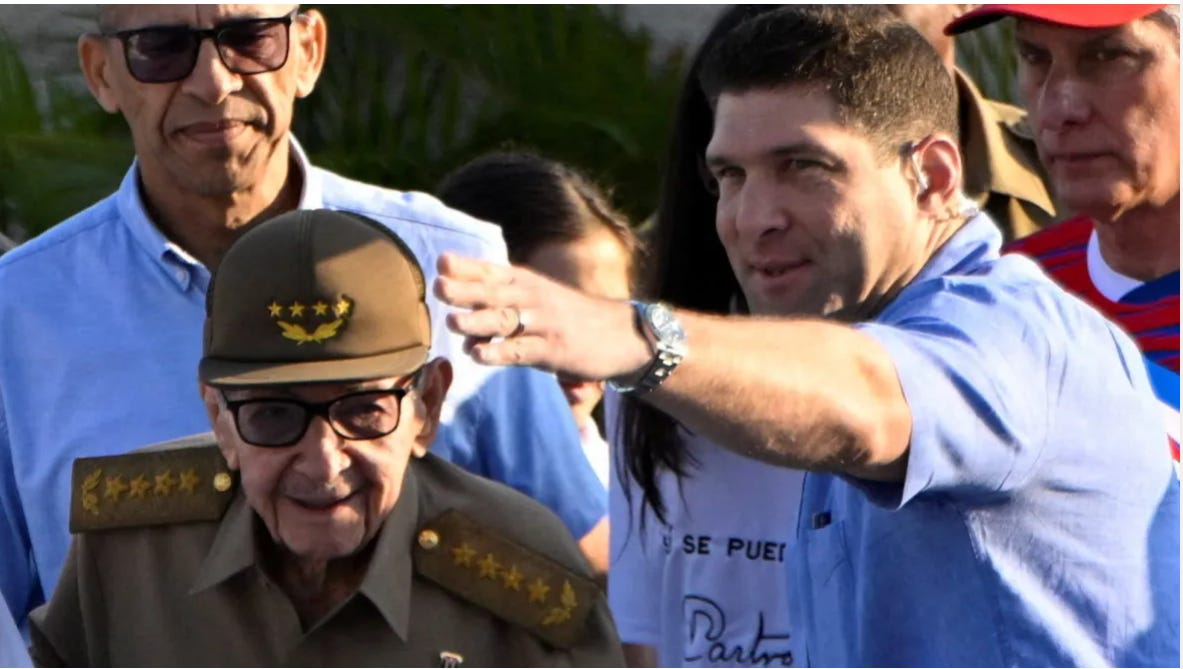
Fidel Castro hid his five sons by Dalia Soto del Valle from official Cuban media for the entirety of his rule. His brother Raúl was more relaxed about his marriage to Vilma Espín. His brother’s grandchildren are not relaxed at all. Raúlito Castro dines in Havana’s best restaurants, dates models, brokers foreign investment. Sandro runs a nightclub and gives interviews to American television. They are visible. They are comfortable. They are not hiding anymore.
The reason they are not hiding is that they no longer need to.
The Power Map
The wealth machine is named GAESA. It is a military conglomerate that controls at least forty percent of the Cuban economy. It publishes no accounts. It answers to no parliament. It is run, traditionally, by family.
Until 2022, GAESA was headed by Luis Alberto Rodríguez López-Calleja, who was Raúl Castro’s son-in-law. Which makes him Raúlito Castro’s father. When he died, control of the conglomerate did not return to the people. It remained inside the institutional bloodline.
The Trump administration is squeezing Cuba’s fuel supply. Cuban citizens are protesting, sometimes setting fires in the streets. Raúl is publicly performing solidarity at May Day rallies, with Raúlito at his elbow. President Miguel Díaz-Canel is the official face. The real coordination runs through the family-military pipeline that nobody in Cuban media is permitted to name.
The Trump administration is not negotiating with the Cuban Communist Party. It is negotiating with a dynasty wearing party costume.
The CRIX22 Read: The Rigid Doctrine Matrix
CRIX22’s fifth lens, The Rigid Doctrine Matrix, tracks the gap between what an institution claims to believe and what it actually does. The wider that gap, the more brittle the institution becomes, because its own doctrine can be turned against it.
The Cuban Revolution’s doctrine was egalitarian, anti-imperialist, and anti-dynastic. It promised to abolish the inherited privilege of the old Batista class. Fidel hid his family because the doctrine required him to. The performance was the legitimacy.
The Hypocrisy Gap has now blown open. Sandro on US television. Raúlito in playboy mode. GAESA opaque. The doctrine still operates as a microphone, but it no longer operates as a shield. Cubans coined “la familia real” because they have decoded the gap themselves. Trump is now exploiting the gap because the regime can no longer credibly claim it does not exist.
When a doctrine becomes a costume, the people who wear it become targets.
Who Gets Protected
The protection structure is layered. GAESA’s opacity protects the family’s wealth from internal accountability. The revolutionary brand protects the dynasty from the international moral pressure that would normally attach to oligarchy. The embargo protects the regime’s external narrative by guaranteeing a permanent enemy. Russian and Chinese strategic interests protect the regime’s geopolitical floor.
The biggest protection is rhetorical. As long as Western progressives still read Cuba as a revolutionary holdout, the dynastic-extraction story stays under-reported. The doctrine protects the family by protecting the conversation.
Who Gets Used
The eleven million Cubans on the island. The protesters in Havana. The taxi driver weaving through the dark. The elderly in apartments with no refrigeration. The patients in hospitals with no power. The workers paid in a currency that buys nothing.
They are used to justify the embargo to Washington. They are used to justify the regime to the world. They sit in the middle of two narratives that feed off their suffering. Neither narrative will end it.
The Next Pressure Point
Watch for two collisions.
First, the GAESA succession question. Luis Alberto Rodríguez López-Calleja’s 2022 death created a quiet inheritance crisis inside the conglomerate that controls most of the economy. The factions inside Cuba’s military-business class are now jockeying over who controls forty percent of the country’s wealth in the middle of an energy collapse. That is where defection risk lives.
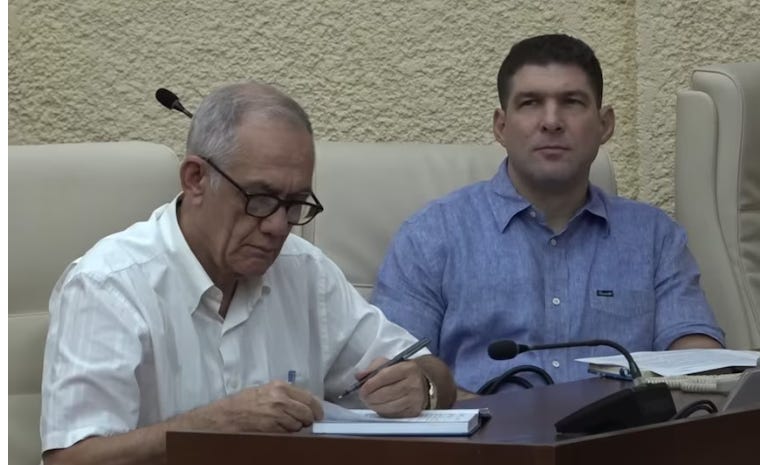
Second, the Raúlito channel. If a Castro grandson is the regime’s negotiator with Trump, the regime has already conceded that party institutions cannot deliver. The next question is what gets traded. Once that becomes visible, the doctrine has nothing left to defend.
Signals Before The Break
Watch the cousin. Sandro Castro’s US television appearances are not random. They are testing what the family can say in public.
Watch the silence. When Raúlito Castro stops appearing at official events, the negotiation has gone serious.
Watch GAESA. Any internal reorganization, foreign partner announcement, or unexplained military appointment is a tell.
Watch the blackouts. The pattern of which neighborhoods go dark and which stay lit reveals who still gets protection.
Watch the exiles. If the Miami Cuban-American establishment suddenly stops attacking the regime, a deal is being shaped.
Watch the language. The day Cuban state media stops using the word “revolutionary,” the costume is officially off.
Final Read
Every revolution that lasts long enough becomes the thing it overthrew.
Cuba’s just took sixty years.
The grandsons are not betraying the revolution. They are completing it.